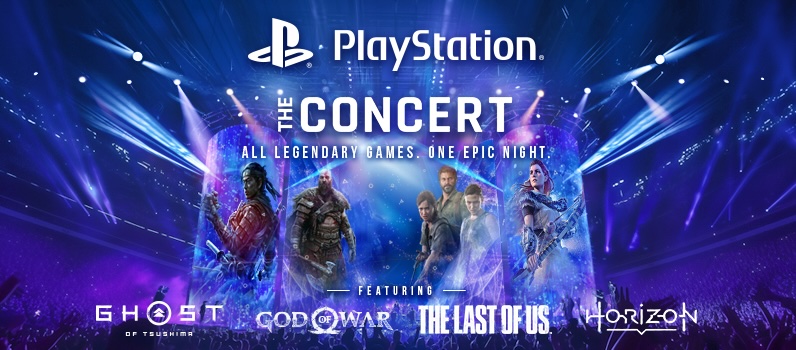
My expectations were high leading up to PlayStation | The Concert, and I certainly was not alone in this. PlayStation clearly wanted audience expectations to be high, with the concert described as a “cutting-edge live music event that redefines entertainment” – how the concert intended to redefine entertainment remained a mystery, which was likely intentionally vague. But the website for the event did promise state-of-the-art technology and captivating visuals “in a way only PlayStation can deliver.” As one of the largest video game companies with the world’s most popular gaming console and their own creative studio, it makes sense that PlayStation could deliver a higher quality game music experience in comparison to smaller, independent organisations.
Despite the hype PlayStation had attempted to generate on their website and promotional videos, marketing for the concert tour had been lacking. As someone who considers myself to be quite entrenched in the world of game music, I had expected to see an ad for the concert on social media, streaming platforms, or on the PlayStation console itself, but I saw almost no promotion for the event. Online forums echo this sentiment, with many disappointed that they weren’t aware of the tour, resulting in them missing the chance to attend. Others claimed that the crowds were small and that some dates had been cancelled, likely due to low ticket sales. This seems strange, PlayStation certainly has huge reach within the gaming world and likely could have sold out arenas had promotion been emphasised.
However, Wembley Arena was surprisingly busy and the audience was clearly excited to hear their favourite soundtracks in a new and redefined way. Especially enthusiastic fans even came dressed up as iconic characters from PlayStation exclusive games. The experience promised music from the biggest PlayStation Studios releases, such as Horizon, Ghost of Tsushima, The Last of Us, and God of War, alongside other fan favourites.
A relatively small ensemble of multi-instrumentalists began with a long medley of pieces from the Horizon games, a blended mixture of fast-paced contemporary action music and ethereal themes with lilting vocals. Horizon’s themes are a fusion of orchestral, string-heavy melodies, rhythmic drumming, and electronic synthesisers – embodying the environment of the game – a coming together of nature and technology to create the futuristic, post-apocalyptic world where the jungle has reclaimed cities, yet wildlife is robotic.
Following this, the orchestra played through Bloodborne’s two main themes. As one of the most popular and iconic releases of the past decade, this seemed like a relatively small tribute and perhaps left the audience wanting to hear more of the foreboding and dissonant soundtrack. In comparison to Bloodborne, the music of Ghost of Tsushima was allotted a large chunk of the run time, with a total of nine separate pieces featuring in a medley. This is more than later, and arguably more popular, titles such as The Last of Us and God of War, which both featured seven pieces of the soundtrack from each franchise. While Bloodborne seemed like an afterthought, the popularity of Ghost of Tsushima’s soundtrack appeared to have been exaggerated and the audience became restless throughout the long section.
A welcome inclusion to the lineup of games was that of the standout 2012 game, Journey, which won a BAFTA for original score, and was the first game soundtrack to be nominated for a Grammy for Best Score Soundtrack for Visual Media. The game was certainly a breakthrough when it came to official recognition of game music. Austin Wintory’s cello-led score is well known for being one of the most evocative and emotional game soundtracks. One which elevated a short game, which features no dialogue or combat, into a cult classic and fan favourite. The inclusion of three movements from the score was an appreciated nod to the impact the game has had on the popularity of video game music.
The majority of buzz from the audience surrounded the anticipation of just two games – The Last of Us and God of War – both of which were dedicated large sections of the second half of the concert. The heartbreaking themes of The Last of Us brought the audience to tears, and Bear McCreary’s God of War soundtrack, iconic and imposing, roused the audience to a feverish excitement. The small ensemble breezed through the programme expertly, with impressive vocal performances. However for some of the more demanding orchestral soundtracks, such as God of War with its forceful choral chants and roaring brass themes, the impact of a larger orchestra or choir was missed. It seemed like the audience were waiting for these two games, as afterwards interest dropped off sharply. The inclusion of PlayStations latest sensation – Astro Bot was a fun nod to current and future game music developments. But many people began to leave before the end of the concert, having already been satisfied by hearing the specific pieces they had attended for.
One of the main promises made by PlayStation in the run up to the concert was impressive, never-before-seen visuals. Although the onstage visuals were undoubtedly more impressive than most game concerts, they were underwhelming considering what was promised. The staging featured five translucent panels which descended from above the stage and created an interesting 3D layered effect. This was a creative and innovative idea, however I believe it could have been utilised further. During the longer sections of the concert, such as Horizon, Ghost of Tsushima, and God of War, these panels were used to create depth and layer images and animations. But during other sections, such as that of Bloodborne or Journey, the staging showed mostly still images. This was disappointing as these games are known for their impressive visuals, especially Journey, where the rolling desert landscapes could have been showcased further. With the concert having a large budget and resources backed by one of the biggest creative game studios in the world, it is understandable that audiences expected more.
A major positive, something which I have long been anticipating within the live game soundtrack space, was that the onstage imagery was designed for the purpose of the experience and tailored to the music. Many video game concerts use recorded gameplay or still imagery to accompany the live music, but this can often come across as clumsy and ill-fitting, or boring and uncreative. So it was refreshing to experience game music with suitable, well-timed visuals. This was certainly an optimistic development and a step in the right direction for video game concerts. The experience was much more immersive with visuals that fit the themes, rather than generic gameplay.
Something which stood out at this event was that the inclusion of so many games with vastly differing themes and environments created a multi-genre experience, featuring a wide variety of instruments and sounds. This is extremely refreshing, and left the audience in constant anticipation of what they would hear next. Rather than attempting to create a concert programme of similar sounding pieces, or those of a certain time period, the experience embraced the variety of sounds game music encompasses. This represents a turn towards a trend of less traditional concert programmes, which is growing in popularity, and that game music inherently falls within. Rather than redefining game concert visuals, this is what the event really did help to redefine.
The concert was refreshing and enjoyable. Although lacking in some areas, the event did represent the growing popularity of game music concerts and delivered an interesting and varied musical experience. But the entire tour seems to be suffering from the effects of being overhyped yet under-marketed, and as a result of this, audiences seem to be either underwhelmed or disappointed that they missed out entirely.

 PB Sound scapes
Leave a comment